¶ Basics
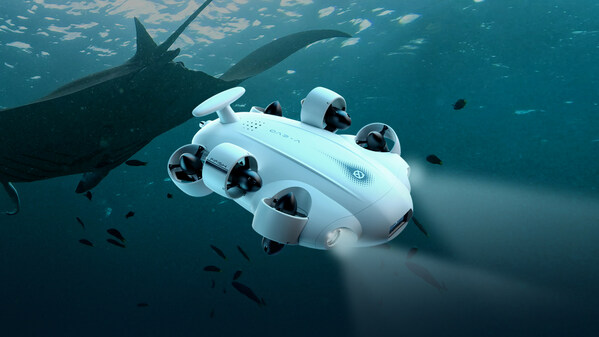
An underwater drone has to be built different than a flying drone. On one hand, it does not have to fight gravity. On the other hand, this is also a downside. A flying drone can use gravity to move in all required directions. An underwater drone cannot do so. It needs more motors to so all axis (forward, backward, sideways, rotation)
An airplane (or better torpedo) style drone (like an uboat) requires less botors but it has to move either forward or backwards to make a curve. This is suboptimal for underwater investigation.
¶ Main Materials required
- Air tight compartment for electronics
- 6 brushless motors
- electronics (arduino)
- Buoyant cable to control the drone
- Batteries
¶ Main challenges
¶ Controls
Radio does not pass the water far, audio does travel the water far but the transmission speed is really bad
A cable has to be used as a connection. this also makes it easier to retrieve the Drone on failure.
The cable should be floating in order to not get tangled underwater
It is unclear yet what cable to use..
¶ Drive system
Apparently brushless drone motors can be used but they will corrode, especially in saltwater
Special water tight motors exist
¶ Pressure
Pressure raises by ~1 bar every 10 Meters. this is a LOT, and not to be underestimated
It seems feasible to make a drone with ~20-30 meters diving capacity.
Safe Methods for routing the cables into the drone have to be found.
¶ Weight
the weight should be roughly neutral, slightly more lightweight than water (so the drone comes up when catastrophic failure
Metal is quite heavy, plexi not so stable. Adding electronics (especially batteries to the metal container makes it even heavier)
further air tanks can be used, but they increase the footprint.
perhaps, a solution would be to print a container structure by 3d printing, perhaps just a hull to carry carbon fiber reinforcement and then lay a carbon fiber shell around it.
¶ Battery Compartment
for a really big rov the 18650 cells require a housing space of at least 55.8mm in diameter:
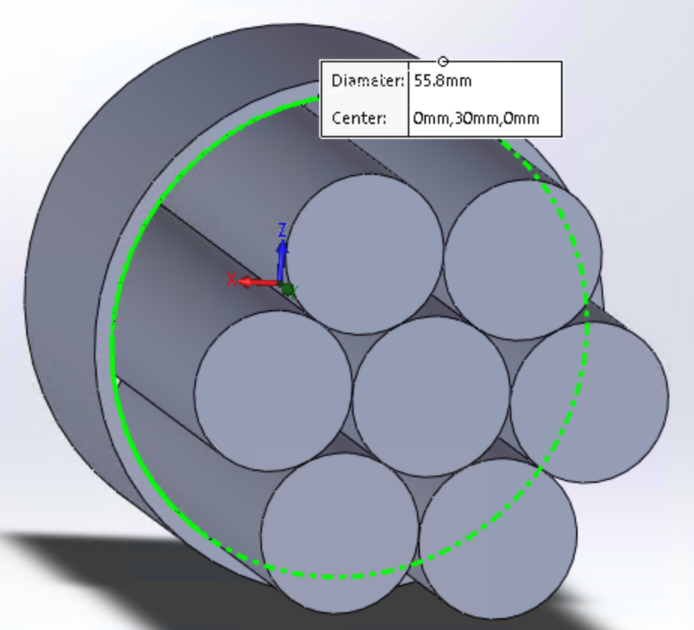
a small housing with 4 sells requires a diameter of 44.9mm